
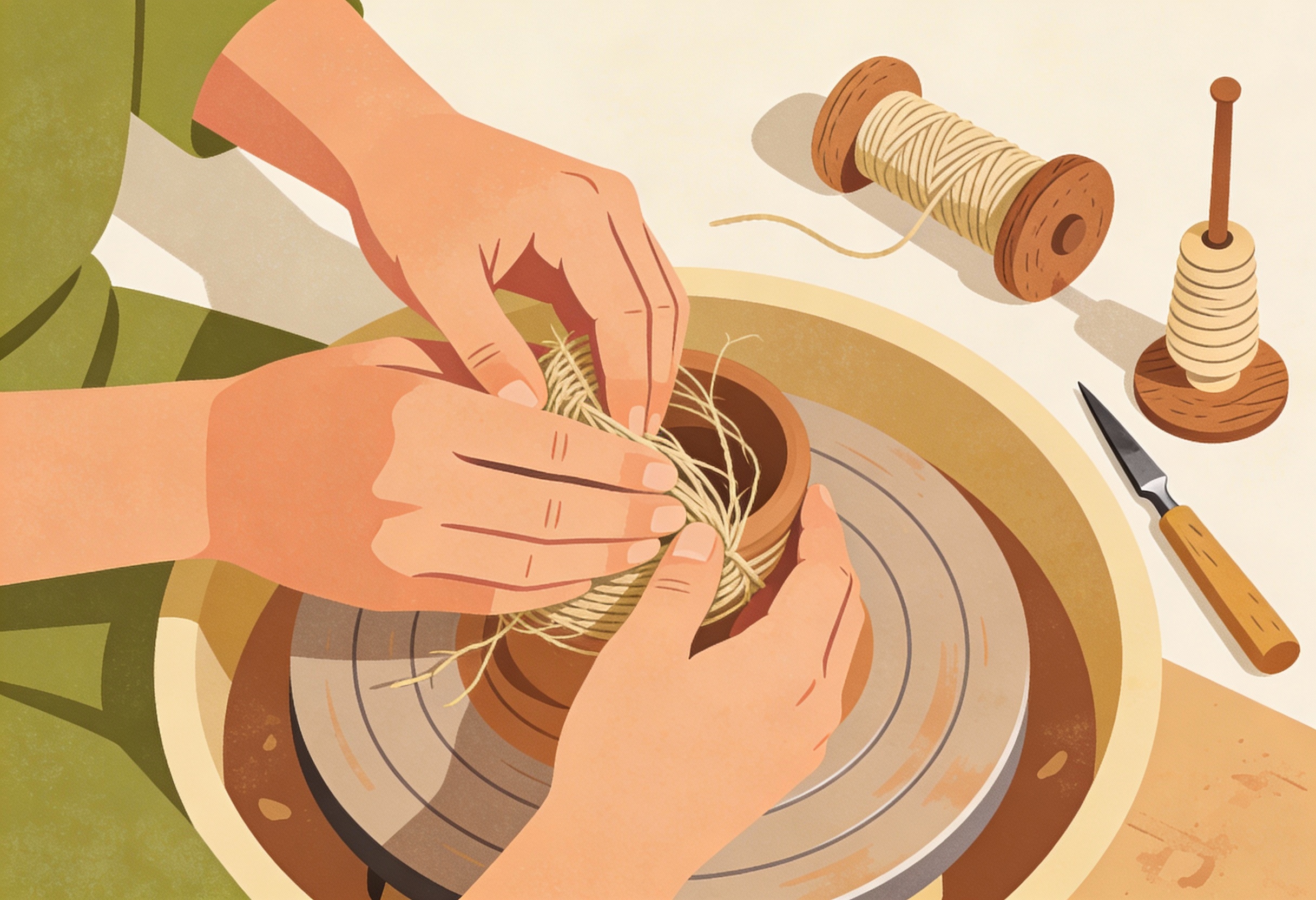
Some objects feel finished the moment you see them. Others feel ongoing, as if they’re still in conversation with the time and hands that shaped them. Handmade objects tend to fall into the second category. They don’t just exist as results. They arrive carrying traces of process, intention, and quiet decisions that never made it into words.
You don’t always notice this immediately. The pull is subtle. A surface feels warmer than expected. A weight feels considered rather than calculated. There’s a sense that something happened here before the object reached you. Not in a dramatic way, but in a human one.
That feeling is not nostalgia. It’s recognition.
Process Leaves Marks Long Before Meaning Does
Every object begins as material, but material alone doesn’t explain why some things feel more present than others. The difference often lies in process. When slot depo 5 ribu is made slowly, choices are made one at a time. Adjustments happen mid-motion. Small corrections are felt, not measured.
These moments leave marks. Not always visible ones, but perceptible ones. Slight variation in texture. A line that isn’t perfectly straight. A finish that holds depth instead of shine. These details are not mistakes. They are records.
Mass production is designed to erase these records. Handmade work allows them to remain. That’s why handmade objects often feel more honest. They don’t hide the fact that someone was there, making decisions as they went.
Intention Changes How Objects Are Read
Intention is difficult to define, but easy to sense. When a maker cares about how something is made, that care shapes the outcome in ways that go beyond function.
An object made with intention feels considered. Not optimized. Not rushed. The choices behind it feel deliberate, even when they’re subtle. You don’t need to know the maker’s name or story to feel this. The object communicates it on its own.
This is where the real pull begins. You start to treat the object differently. You pay attention. You handle it with more care, not because it’s fragile, but because it feels like it deserves presence.
Why Handmade Objects Feel Less Replaceable
Replaceability is a defining trait of modern objects. If something breaks, another one appears. Identical. Immediate. Forgettable.
Handmade objects resist this logic. Even when they serve everyday functions, they feel singular. Not unique in a loud way, but specific. Like this one exists because of a particular sequence of actions that won’t happen again in exactly the same way.
That specificity changes attachment. You’re less inclined to discard something that feels like it has already lived a little. Wear doesn’t diminish it. It adds another layer to its story.
Over time, the object becomes less about ownership and more about continuity.
Craft as a Quiet System of Values
Craft is often discussed as skill, but skill alone doesn’t explain its impact. Craft is also a system of values. What is allowed to take time. What is adjusted by hand instead of by formula. What matters enough to slow down for.
When a maker chooses patience over efficiency, that decision becomes embedded in the object. Handmade work carries these choices forward, even when the user is unaware of them.
This is why craft often feels grounding. It reflects restraint. Attention. Responsibility. Not as statements, but as qualities you feel when you interact with the object.
The Rhythm of Making Versus the Rhythm of Use
There’s an interesting relationship between how something is made and how it’s used. Objects created with a slower rhythm tend to invite slower interaction. You don’t rush them. You don’t treat them as disposable.
The rhythm of making transfers. It sets expectations. You adjust your own pace without realizing it. That’s part of the real pull handmade objects have. They don’t ask you to slow down. They quietly make rushing feel out of place.
In this way, craft influences behavior long after the making is done.
When Objects Become Memory Carriers
Over time, objects accumulate meaning. Not through symbolism, but through presence. They’re there during routines. They witness repetition. They absorb context.
Handmade objects seem especially suited for this role because they already carry a past. Adding your own use doesn’t overwrite that past. It layers on top of it. The story grows instead of resets.
This is why certain objects stay with people longer than expected. They’re not just useful. They’re familiar in a way that feels earned.
Real Pull Lives in What Can’t Be Standardized
The strongest pull handmade objects have is not visual or functional. It’s relational. It comes from knowing, even subconsciously, that this object exists because someone made a series of human decisions.
Those decisions can’t be fully standardized. They can’t be replicated perfectly. And that’s the point.
In a world that favors speed and sameness, objects that carry their making with them offer something different. Not better. Not louder. Just deeper.
They remind us that value doesn’t always come from perfection or scale. Sometimes it comes from attention held long enough to leave a trace.